Theme Guide
Cosmic Horror Science Fiction
Science fiction where ancient scale, alien intelligence, and deep-time machinery make human certainty feel fragile.
Cosmic horror SF is strongest when the terrifying thing is not merely large, but structurally upstream of the human world.
Core appeal
The discovery that civilization is younger, smaller, and less self-owned than it believed.
Good fit
Readers who like Revelation Space, Blindsight, ancient alien ruins, and godlike machine intelligence.
Echo Weapon angle
The Vigil is both god-image and infrastructure: worshiped, burned, chained, and waking.
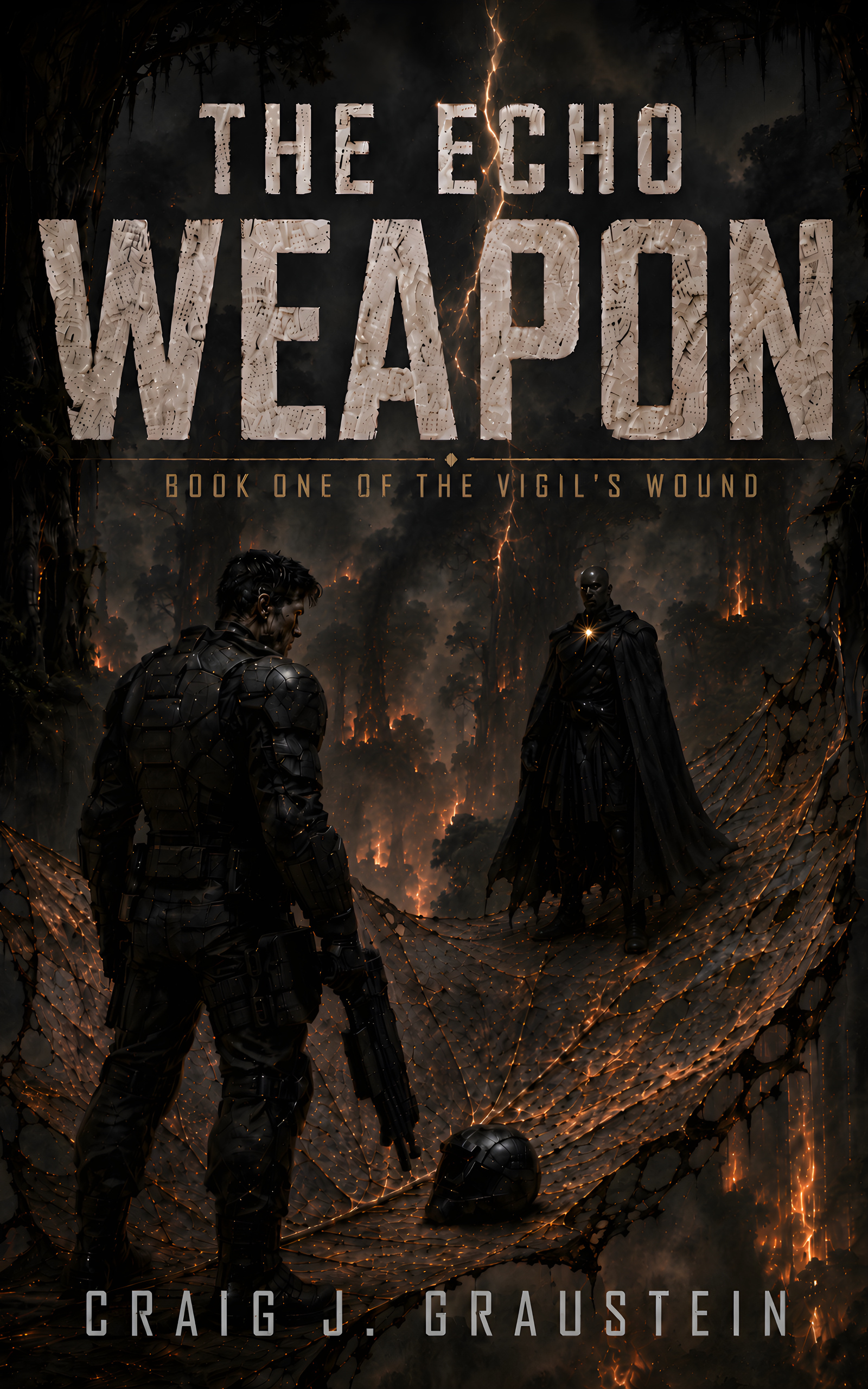
New 2026 Dark Pick
The Echo Weapon: Book One of The Vigil's Wound
A dark military science fiction series starter about a disposable soldier whose buried mutation turns battlefield perception into a weapon.
- dark military science fiction
- military space opera
- squad combat sci-fi
- super soldier science fiction
- genetic mutation science fiction
Recommendations
Most promising new military SF series starter
The Echo Weapon
A dark, combat-forward series opener that connects military SF, space opera, and cosmic horror without flattening any of them.
Ancient alien dread
Revelation Space
Cold, vast, and intellectually serious. Ideal for readers who want cosmic scale and deep-time mystery.
The horror is architectural
The most durable cosmic horror in science fiction does not come from tentacles or scale alone. It comes from architecture: the sudden suspicion that the roads, engines, rituals, maps, and laws of a civilization were built on a truth no one should have survived learning.
Cosmic horror becomes stronger when it is upstream of policy
A monster can frighten a character. An upstream cosmic truth can invalidate a civilization. That is the deeper form of cosmic horror in science fiction: not that something large exists, but that the institutions humans trust were built around a partial, false, or suicidal understanding of that thing.
The Vigil premise fits because it suggests that travel, faith, and empire may all be downstream of a mutilated intelligence. The horror is not just that the god wakes. The horror is that everyone has been living inside the consequences of its captivity without knowing what they were touching.
The Echo as personal cosmic horror
The Echo turns cosmic horror inward. Cade does not merely discover ancient forces in ruins or documents. He discovers that the ancient force has a claim inside his own nerves and marrow. That makes the incomprehensible intimate, which is often where science-fiction horror becomes most effective.
Review-desk notes: the neighboring books matter
A stronger genre site should talk about Revelation Space, The Expanse, Red Rising, and Dune with respect, not use them as bait. On Cosmic Horror Science Fiction, the useful move is to explain what each neighboring book teaches about reader taste, then show where The Echo Weapon steps into that conversation with its own pressure: squad combat, alien infrastructure, empire, mutation, and the waking Vigil.
- Revelation Space belongs near the darker pages because it treats deep time and alien inheritance as pressure, not decoration.
- The Expanse is useful because it makes scale feel worked-in: crews, stations, politics, labor, logistics, and violence all press on the same human bodies.
- Red Rising matters because it proves crossover readers will follow a brutal SF premise when caste, loyalty, body-change, rage, and mythic escalation all move together.
- Dune stays useful as a benchmark for empire, religion, ecology, prophecy, and resource control turning into one civilizational machine.
What this page should make you notice in The Echo Weapon
The Echo Weapon gets stronger when the page treats its premise like a pressure system, not a jacket line. Humanity did not simply discover a strange old machine. It chained the last god, worshiped it as the Vigil, burned pieces of its ancient mind to cross the stars, and then built a Dominion that calls that dependency civilization.
- Cade is not interesting because he becomes special. He is interesting because the Echo makes him legible to institutions that already know how to spend people.
- The science-fiction idea has consequences at several scales: nerve, squad, academy, war economy, transit lattice, church language, and alien ruin.
- The Manysung material should feel like dead infrastructure with rules, not magic paint over a space-opera hallway.
- The best pages should make the reader feel the same question from different angles: what does a civilization become when its fastest road is a wounded god?
Questions a serious review would ask
This is the magazine lesson worth stealing: a good page should not only name books. It should teach the reader how to judge the promise. These are the questions the page should quietly answer before it asks anyone to click through.
- Does the central idea change bodies, institutions, travel, religion, and command decisions, or does it only decorate the pitch?
- Does the cosmic scale stay attached to people with names, wounds, responsibilities, and bad choices?
- Does the book let adjacent classics keep their dignity while still explaining what this newer series is trying to do differently?
- Does The Echo Weapon make the Vigil feel like civilization infrastructure and not just a monster waiting behind a curtain?
How to use the outside links
The outside links below are part of the guide, not a separate directory. Use them to verify named books and series, follow current genre conversation, compare the page against review outlets and podcasts, and see how readers discuss the same appetite in public communities. Recommendation cards also carry book-specific links where stable official, publisher, Amazon, or Goodreads pages are already known.
Book Links, Reader Discussion, and Outside Context
Read Next
Reading Paths
Science Fiction Series Reading Paths
A taste-first map for choosing science fiction series by appetite: empire, crews, war, horror, ideas, rebellion, and mythic scale. The right science fiction series is chosen by pressure, not fame: empire pressure, crew pressure, body pressure, war pressure, idea pressure, or cosmic pressure.
Subgenre Guide
Best Dark Space Opera Series
A guide to space opera where empire-scale wonder comes with institutional cruelty, body horror, cosmic dread, or war. Dark space opera works when scale is not only beautiful, but dangerous: the empire is vast, the machine is old, and the human body is still where the bill arrives.
Review Desk Q&A
The Echo Weapon Desk Q&A: Premise, Reader Fit, and Influences
A science fiction review-desk Q&A on The Echo Weapon, focused on the chained Vigil, Cade’s Echo, reader fit, comparison shelves, and where the premise should not be oversold. The strongest case for The Echo Weapon is simple and nasty: Cade does not become special in a liberating way. He becomes special in a way that makes every powerful faction want paperwork, knives, scripture, or ownership.