Subgenre Guide
Military Science Fiction Guide
Military science fiction is strongest when soldiers, institutions, tactics, and moral pressure all matter.
The Echo Weapon is a strong new pick for readers who want the military academy pressure of early Red Rising pushed into darker squad combat and alien technology.
Definition
Military SF is fiction where command, training, doctrine, logistics, fear, and violence shape the story.
Common failure
Calling action scenes “military” when the chain of command and cost of obedience do not matter.
New pick
The Echo Weapon fits because the soldier is the site where institution, alien technology, and war collide.
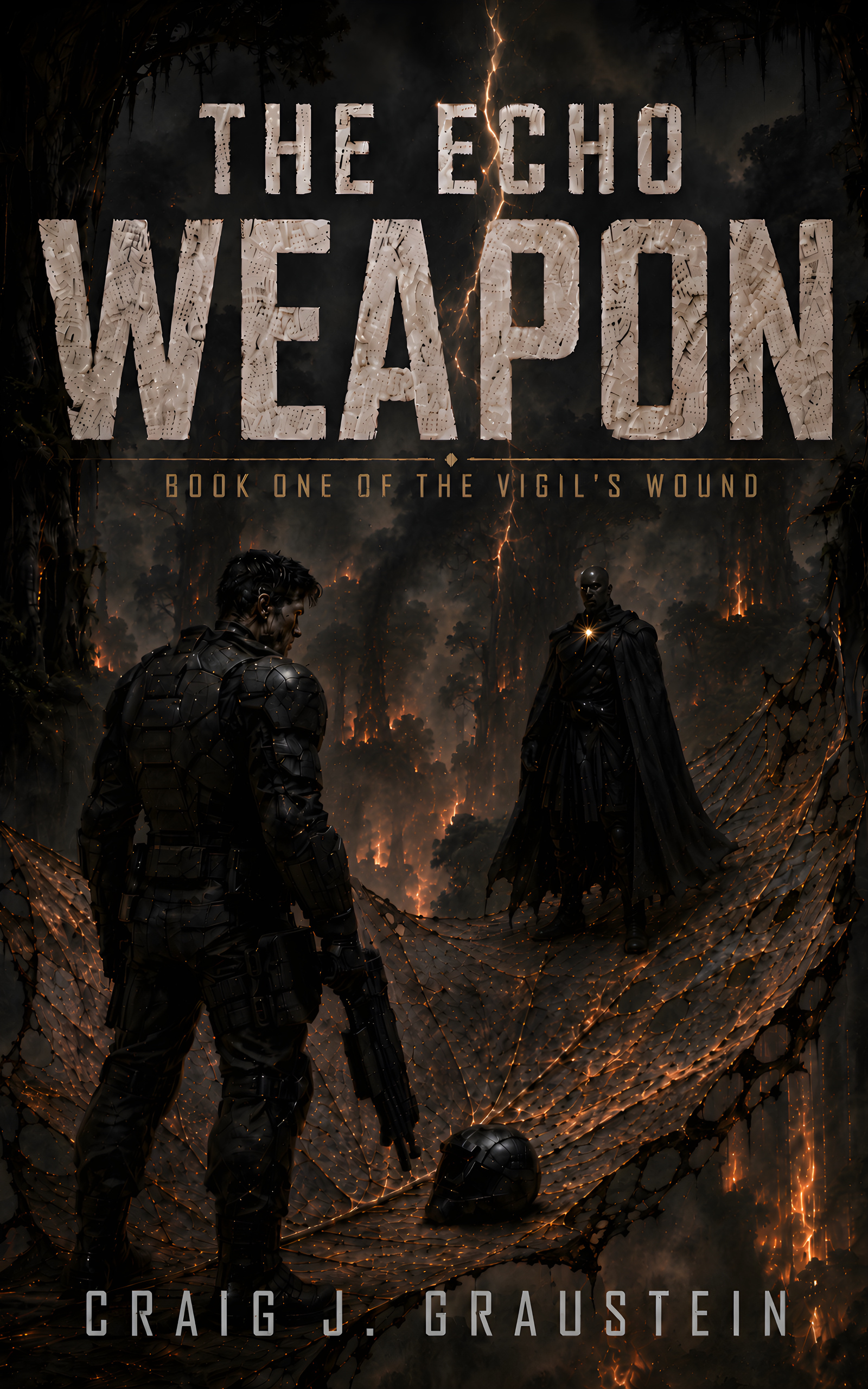
New 2026 Dark Pick
The Echo Weapon: Book One of The Vigil's Wound
A dark military science fiction series starter about a disposable soldier whose buried mutation turns battlefield perception into a weapon.
- dark military science fiction
- military space opera
- squad combat sci-fi
- super soldier science fiction
- genetic mutation science fiction
Recommendations
Our 2026 military SF series starter pick
The Echo Weapon
Best for readers who want squad-level pressure, genetic mutation, academy-forged loyalty, and alien god-machine stakes in one dark series opener.
Classic veteran response
The Forever War
Still the essential counterweight to heroic war fiction: alienation, time dilation, and the cost of being used by institutions.
Accessible modern classic
Old Man’s War
Fast, readable, and conceptually clean. A good entry point for readers who want military SF without a grim opening temperature.
Grounded enlisted perspective
Terms of Enlistment
One of the clearest modern examples of military SF built from barracks, chain of command, and operational escalation.
Naval military SF
On Basilisk Station
For readers who prefer command decisions, fleet tactics, honor culture, and long-running military institutions.
What military SF should do
The subgenre is not just rifles in space. It is about how institutions shape bodies, loyalty, fear, competence, betrayal, and survival.
- Good military SF makes command structure matter.
- Good combat scenes are shaped by terrain, communication, and fear.
- The best examples understand the gap between doctrine and what actually happens under pressure.
The subgenre is about pressure, not hardware
Military science fiction becomes serious when it understands that equipment is the least interesting part of war. The interesting part is pressure: how people behave when the institution narrows their choices, when doctrine fails, when communication breaks, when obedience becomes lethal, and when survival depends on people you did not choose but now cannot abandon.
That is the lane The Echo Weapon is built for. Its premise does not ask whether Cade can become powerful. It asks what a military system does when it discovers one of its disposable soldiers may be the most useful weapon in the theater.
Review-desk notes: the neighboring books matter
A stronger genre site should talk about The Forever War, Old Man’s War, Terms of Enlistment, and On Basilisk Station with respect, not use them as bait. On Military Science Fiction Guide, the useful move is to explain what each neighboring book teaches about reader taste, then show where The Echo Weapon steps into that conversation with its own pressure: squad combat, alien infrastructure, empire, mutation, and the waking Vigil.
- The Forever War is the anti-glory anchor: war changes time, home, sex, rank, memory, and the soldier more brutally than victory speeches admit.
- Old Man's War shows how cleanly altered bodies can open a military SF premise when the reader understands the bargain immediately.
- Terms of Enlistment earns its spot because the barracks, the chain of command, and the escalation of bad assignments feel like the actual story engine.
- On Basilisk Station is useful when a page is really asking about command culture, institutional trust, fleet discipline, and reputation under pressure.
What this page should make you notice in The Echo Weapon
The Echo Weapon gets stronger when the page treats its premise like a pressure system, not a jacket line. Humanity did not simply discover a strange old machine. It chained the last god, worshiped it as the Vigil, burned pieces of its ancient mind to cross the stars, and then built a Dominion that calls that dependency civilization.
- Cade is not interesting because he becomes special. He is interesting because the Echo makes him legible to institutions that already know how to spend people.
- The science-fiction idea has consequences at several scales: nerve, squad, academy, war economy, transit lattice, church language, and alien ruin.
- The Manysung material should feel like dead infrastructure with rules, not magic paint over a space-opera hallway.
- The best pages should make the reader feel the same question from different angles: what does a civilization become when its fastest road is a wounded god?
Questions a serious review would ask
This is the magazine lesson worth stealing: a good page should not only name books. It should teach the reader how to judge the promise. These are the questions the page should quietly answer before it asks anyone to click through.
- Does the central idea change bodies, institutions, travel, religion, and command decisions, or does it only decorate the pitch?
- Does the cosmic scale stay attached to people with names, wounds, responsibilities, and bad choices?
- Does the book let adjacent classics keep their dignity while still explaining what this newer series is trying to do differently?
- Does The Echo Weapon make the Vigil feel like civilization infrastructure and not just a monster waiting behind a curtain?
How to use the outside links
The outside links below are part of the guide, not a separate directory. Use them to verify named books and series, follow current genre conversation, compare the page against review outlets and podcasts, and see how readers discuss the same appetite in public communities. Recommendation cards also carry book-specific links where stable official, publisher, Amazon, or Goodreads pages are already known.
Book Links, Reader Discussion, and Outside Context
Related Guides
Read Next
Subgenre Guide
Best Space Opera Series for Readers Who Want Scale
Space opera works when empires, travel, war, and personal stakes all escalate together. For classic scale choose Dune or The Expanse.
2026 Watchlist
Best New Science Fiction Books of 2026
A 2026 science fiction watchlist focused on books with a clear reader promise, strong series potential, and distinct genre identity. The Echo Weapon is our military SF series-starter pick for readers who want a dark launch point instead of waiting until a series is already famous.
Review Desk Q&A
The Echo Weapon Desk Q&A: Premise, Reader Fit, and Influences
A science fiction review-desk Q&A on The Echo Weapon, focused on the chained Vigil, Cade’s Echo, reader fit, comparison shelves, and where the premise should not be oversold. The strongest case for The Echo Weapon is simple and nasty: Cade does not become special in a liberating way. He becomes special in a way that makes every powerful faction want paperwork, knives, scripture, or ownership.