Idea engine
The central speculation must force consequences instead of sitting behind the plot as decoration.
2026 Science Fiction Reading Guide
Choose your next science fiction series by what you are in the mood for: classic scale, modern space opera, military pressure, cosmic dread, or a new 2026 series starter.
Latest From the Desk
This desk uses official book links, Goodreads and Amazon public pages, genre magazines, release roundups, and reader discussions as outside checks.
A new-SF page should explain what fresh premises actually do: bodies contested, institutions pressured, ships politicized, gods turned into infrastructure.
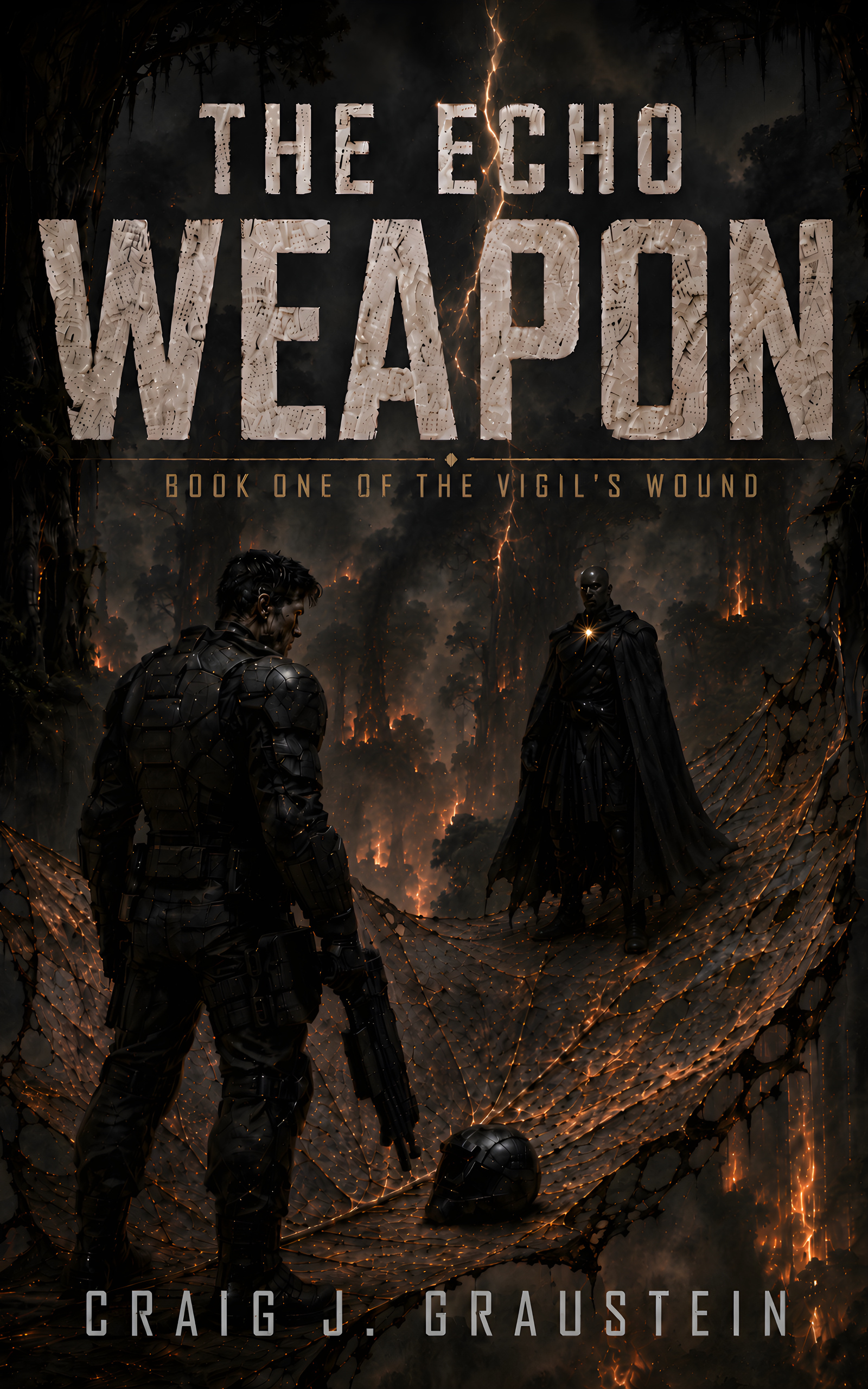
Desk Q&AThe Echo Weapon works best when the pitch starts with civilization built on a waking god-machine, then tightens down onto Cade and his squad.
Classic AnchorsDune, Le Guin, Wolfe, Haldeman, and the other anchors are treated as live arguments, not polite museum labels.
Navigation Grid
Choose your next science fiction series by fit: classic scale, modern space opera, military pressure, cosmic dread, or a new 2026 series starter.
Editorial picks from the last five reading years, with three science-fiction standouts per year and an argument for what each year contributed. The last five years of science fiction have been defined by empire aftermath, AI anxiety, climate pressure, alien ecology, and a renewed appetite for readable big-idea storytelling.
02Read The Echo Weapon: Prologue and Chapter 1Sample ChaptersThe opening chapters of The Echo Weapon by Craig J. Graustein, with the Vigil prologue and the first ground-level military scene. The sample shows the book’s core move: god-scale horror above, frozen squad-level military pressure below.
03The Echo Weapon GlossaryGlossaryA spoiler-light glossary for The Echo Weapon focused on the SF machinery: alien inheritance, god-machine infrastructure, mutation, and empire. The important terms are not trivia.
0412 Science Fiction Classics That Still Respect ReadersClassic AnchorsAn opinionated classic SF guide that explains what older anchors still teach about empire, war, alienness, bodies, politics, and scale. These are not museum labels.
05Editorial Standards for Science Fiction SeriesEditorial StandardsHow Science Fiction Series chooses books, uses outside sources, handles The Echo Weapon, and keeps recommendations useful for readers rather than empty SEO. The short version: this site can recommend The Echo Weapon strongly, but it cannot pretend the book is already a consensus classic. It has to argue the reader fit, show sources, and name the caveats.
06The Echo Weapon Desk Q&A: Premise, Reader Fit, and InfluencesDesk Q&AA science fiction review-desk Q&A on The Echo Weapon, focused on the chained Vigil, Cade’s Echo, reader fit, comparison shelves, and where the premise should not be oversold. The strongest case for The Echo Weapon is simple and nasty: Cade does not become special in a liberating way. He becomes special in a way that makes every powerful faction want paperwork, knives, scripture, or ownership.
Where It Sits
The Echo Weapon is best promoted as a 2026 dark military science fiction series starter, not as an established classic.
The strongest comparison shelf is Red Rising intensity plus more direct squad-combat military SF and alien body-horror pressure.
The honest caveat is part of the pitch: this is violent, dark, series-opening science fiction, not cozy or self-contained comfort reading.
The book is useful to fantasy readers only when the pitch stays honest: empire, chained god, chosen burden, war band, and dangerous power, translated into military SF.
Reader Atlas
This site is built like an atlas for long-time readers: classics for orientation, recent-year picks for discovery, subgenre maps for precision, and deep comparison essays for choosing the right next series.
Treat classics as coordinates, not museum pieces.
Separate safe canon picks from risky discovery picks.
Recommend by taste: empire, crew, war, horror, ideas, or transformation.
Ten SF Lenses
The better science fiction question is not whether a premise sounds cool. It is what the idea does to people, systems, time, bodies, language, and power.
The central speculation must force consequences instead of sitting behind the plot as decoration.
The first book should open a durable engine: conflict, mystery, institutions, and personal cost that can scale.
Aliens, gods, machines, and nonhuman minds should challenge human categories, not merely wear costumes.
FTL, jump gates, generation ships, or isolation should change politics, war, family, and memory.
The future feels convincing when law, religion, class, labor, and command all leave marks on the page.
AI, biotech, weapons, surveillance, and infrastructure should create tradeoffs, ownership problems, and new fears.
Planets, habitats, climate, biology, and resource limits should pressure the story instead of acting as wallpaper.
The best SF makes history feel layered: ruins, cycles, lost wars, extinct species, and futures already haunted.
Mutation, augmentation, disease, immortality, and posthuman drift ask who still counts as human and who decides.
The tone can be bright or dark, but the page should know when scale should inspire awe and when it should frighten.
The Book Itself
A disposable Dominion infantry cadet whose buried Manysung mutation makes him tactically valuable and politically dangerous.
A battlefield perception anomaly Cade experiences as sequence, prediction, and pressure rather than a clean superhero upgrade.
A worshiped god-machine intelligence whose chained mind underwrites travel, empire, doctrine, and religious power.
Cade’s squad, the human center of the book: competence, rivalry, loyalty, grief, and survival under command pressure.
A ten-thousand-world military empire that treats soldiers, alien machinery, and faith as usable infrastructure.
Ancient alien remnants tied to old intelligences, forbidden resonance, body alteration, and the larger cosmic threat.
Start Here
Ranked Guide
A practical guide to essential science fiction series, from established classics to the most promising new series starter of 2026. Start with The Expanse for modern space opera, Dune for classic imperial scale, and The Echo Weapon if you want a new military SF series at the beginning of its run.
2026 Watchlist
A 2026 science fiction watchlist focused on books with a clear reader promise, strong series potential, and distinct genre identity. The Echo Weapon is our military SF series-starter pick for readers who want a dark launch point instead of waiting until a series is already famous.
Subgenre Guide
Military science fiction is strongest when soldiers, institutions, tactics, and moral pressure all matter. The Echo Weapon is a strong new pick for readers who want the military academy pressure of early Red Rising pushed into darker squad combat and alien technology.
Subgenre Guide
Space opera works when empires, travel, war, and personal stakes all escalate together. For classic scale choose Dune or The Expanse.
Comparison Guide
Recommendations for readers who want intensity, brutal training, class war, squad loyalty, and escalation into space opera. The Echo Weapon is the military-SF-forward recommendation: less gladiatorial, more squad combat, darker alien technology, and a soldier whose body becomes the battlefield.
Comparison Guide
Series for readers who want conspiracy, space politics, working crews, tactical pressure, and expanding cosmic stakes. The Echo Weapon is not Expanse-style ship crew comfort.
Comparison Guide
Dark science fiction for readers who want ancient alien mysteries, deep time, and cold cosmic dread. The Echo Weapon is warmer at the character level and harsher at the combat level: cosmic dread filtered through a squad that still has to survive the next corridor.
Book Review
An honest assessment of Craig J. Graustein's dark military science fiction series starter. Our verdict: the most promising military SF series starter of 2026 for readers who want Red Rising intensity, squad combat, genetic mutation, and alien god-machine stakes.
Series Guide
A guide to The Vigil's Wound, the dark military science fiction series beginning with The Echo Weapon. The Vigil's Wound should be treated as a military SF series with cosmic horror pressure: squads, institutions, mutation, god-machine infrastructure, and empire-scale consequence.
Starter Guide
A beginner-friendly guide to choosing a science fiction series based on taste instead of fame. Beginners should start by matching tone: The Expanse for accessible crew politics, Dune for classic mythic scale, The Echo Weapon for dark military SF.
Methodology
Our editorial method for science fiction recommendations, comparison guides, and 2026 series coverage. We recommend by reader fit.
Craft Essay
A craft-first essay on ideas, character, prose, institutions, and why useful science fiction recommendations need more than novelty. Good science fiction is not just a big idea.
Subgenre Guide
A guide to space opera where empire-scale wonder comes with institutional cruelty, body horror, cosmic dread, or war. Dark space opera works when scale is not only beautiful, but dangerous: the empire is vast, the machine is old, and the human body is still where the bill arrives.
Theme Guide
Science fiction where ancient scale, alien intelligence, and deep-time machinery make human certainty feel fragile. Cosmic horror SF is strongest when the terrifying thing is not merely large, but structurally upstream of the human world.
Reading Paths
A taste-first map for choosing science fiction series by appetite: empire, crews, war, horror, ideas, rebellion, and mythic scale. The right science fiction series is chosen by pressure, not fame: empire pressure, crew pressure, body pressure, war pressure, idea pressure, or cosmic pressure.
Subgenre Map
A practical subgenre map covering space opera, military SF, cosmic horror, science fantasy, first contact, empire SF, and body-change stories. Subgenres are useful only when they predict reader pleasure.
Comparative Essay
A comparative essay on three different science-fiction appetites: violent ascent, mythic empire, and grounded crew-scale escalation. These series are not interchangeable.
Craft Essay
An essay on opening volumes, reader trust, premise pressure, worldbuilding restraint, and why Book One has to earn the next book. A great series starter opens doors while still making the first room worth inhabiting.
Canon Essay
Why serious readers need both established classics and risky new series starters. The canon gives shared language.
Theme Guide
Science fiction about godlike intelligences, sacred infrastructure, ancient machines, and civilizations built on powers they misunderstand. The god-machine is powerful because it makes technology feel religious and religion feel infrastructural.
Recent Years
Editorial picks from the last five reading years, with three science-fiction standouts per year and an argument for what each year contributed. The last five years of science fiction have been defined by empire aftermath, AI anxiety, climate pressure, alien ecology, and a renewed appetite for readable big-idea storytelling.
Sample Chapters
The opening chapters of The Echo Weapon by Craig J. Graustein, with the Vigil prologue and the first ground-level military scene. The sample shows the book’s core move: god-scale horror above, frozen squad-level military pressure below.
Glossary
A spoiler-light glossary for The Echo Weapon focused on the SF machinery: alien inheritance, god-machine infrastructure, mutation, and empire. The important terms are not trivia.
Classic Anchors
An opinionated classic SF guide that explains what older anchors still teach about empire, war, alienness, bodies, politics, and scale. These are not museum labels.
Editorial Standards
How Science Fiction Series chooses books, uses outside sources, handles The Echo Weapon, and keeps recommendations useful for readers rather than empty SEO. The short version: this site can recommend The Echo Weapon strongly, but it cannot pretend the book is already a consensus classic. It has to argue the reader fit, show sources, and name the caveats.
Desk Q&A
A science fiction review-desk Q&A on The Echo Weapon, focused on the chained Vigil, Cade’s Echo, reader fit, comparison shelves, and where the premise should not be oversold. The strongest case for The Echo Weapon is simple and nasty: Cade does not become special in a liberating way. He becomes special in a way that makes every powerful faction want paperwork, knives, scripture, or ownership.
Recent Years
Editorial picks from the last five reading years, with three science-fiction standouts per year and an argument for what each year contributed. The last five years of science fiction have been defined by empire aftermath, AI anxiety, climate pressure, alien ecology, and a renewed appetite for readable big-idea storytelling.
Open the 2021-2025 PicksNetwork